

About AFRAN
Structure and Governance
AFRAN (Australian-French Association for Research and Innovation) is a collaborative and dynamic network enhancing collaboration between France and Australia in science, research, and innovation for a sustainable future.
AFRAN was launched on the 13th of September 2016 by the Ambassador of France to Australia, from a merger between the French Researchers in Australia Network (FRAN), initiated by the Embassy of France to Australia in 2012, and the Australian-French Association for Science and Technology (AFAS ACT Inc.), then completed by AFAS VIC.
AFRAN's governance
AFRAN is constituted as an incorporated, non-for-profit association under the legal framework of the Australian Capital Territory, and has a national remit.
An Executive Committee
is elected annually by its members
is formed for initiatives evaluation within
the extended committee that includes hubs and community leaders
A scientific advisory board
A local employee
has been recruted in 2024 to develop our strategy
and operations
The Executive Committee
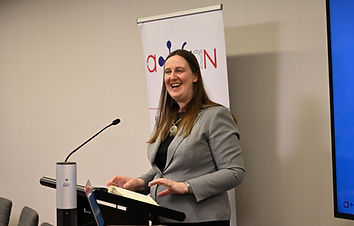

Katherine Daniell - President
Katherine is Interim Director of the School of Cybernetics and Professor at the Fenner School at ANU. Her work focuses on collaborative approaches to sustainable development, with expertise in water governance, climate adaptation, and innovation. She has published over 100 academic works and has played a key role in strengthening research cooperation between Australia, France, and the Pacific. Katherine was awarded the title of Chevalier de l’Ordre National du Mérite by the French Government.
Frederic Hollande - Vice-President
Fred is Head of the Department of Clinical Pathology and a researcher at the University of Melbourne Centre for Cancer Research within the Victorian Comprehensive Cancer Centre (VCCC). His work focuses on cancer cell and translational biology. A former CNRS researcher, he maintains strong ties with the French research community and is Director of the IRL PHANTOM, a joint international laboratory between CNRS and the University of Melbourne dedicated to advancing French-Australian cancer research.


Mark Netto - Treasurer
Mark is an Economics graduate from the University of Melbourne and is conducting research as an Energy Policy Fellow. Mark has worked in Banking, Investment, Public Policy and currently works as an Electorate Officer at the Parliament of Australia. He is passionate about strengthening the Australian-French bilateral relationship and creating partnerships in research and industry.
Kimberley Coulson - Secretary
Kim is Strategy and Operations Manager for AFRAN since 2024. Based at the ANU School of Cybernetics, she previously served as a Science Officer at the Embassy of France in Australia and holds a PhD in immuno-oncology from the University of Toulouse Paul Sabatier. Originally from New Caledonia, Kim is particularly committed to fostering research and innovation partnerships between Australia and French territories in the Indo-Pacific.


Hugh Goold - Vice-Secretary
Hugh is a research scientist with the NSW DPI and an Honorary Research Fellow at Macquarie University. His work focuses on synthetic biology, genomics, and biotechnology, including contributions to the international Sc2.0 project to build the world’s first synthetic eukaryotic genome. He specialises in engineering microbial and algal genomes for applications in sustainability, biotechnology, and food production. Based in Sydney, Hugh is fluent in both French and English.
Ana Forsyth - Public Officer
Ana is a technology risk specialist at KPMG Canberra, providing advisory services on cyber policy and learning solutions. She holds a PhD in cyber security strategy from ANU, focused on strengthening Australia’s cyber workforce and national resilience through education. Having studied and worked across the Middle East, Switzerland, France, and Australia, Ana brings an international perspective to innovation and collaboration. Ana is committed to advancing long-term Australia–France collaboration


Kate Golebiowska
Kate is a Senior Research Fellow at Charles Darwin University, whose research explores how migration policies and social systems shape migrants’ economic and social participation. Her work spans migration studies, demography, workforce development, and public policy. Kate holds a PhD from ANU, was a Fulbright Professional Scholar in 2023, and currently serves as Vice-President of the Australian Population Association.
Dominique Benzaken
Dominique is an international expert in ocean governance, blue economy, and blue finance, with over 15 years of experience working with small island states. Based at the University of Wollongong, she has advised governments across the Indian and Pacific Oceans on sustainable ocean development and finance. Her career spans roles with The Nature Conservancy, IUCN, SPREP, and the Australian Government. A member of several international advisory committees, she recently joined the AFRAN Board

David Ness
David is an Adjunct Professor at Adelaide University with expertise in architecture, infrastructure planning, and sustainable asset management. His research focuses on delivering services with lower energy, material, carbon, and financial costs. He co-organised the 1st International Sufficiency Summit with AFRAN support and has advised the United Nations on sustainable infrastructure. His work explores sufficiency for the world.
Renaud Joannes-Boyau
Renaud is Acting DVC (Research) and Professor of Science and Technology at Southern Cross University. He is also Co-Founder and Chief Scientific Officer of Bower, where he develops AI-powered tools to improve research workflows, reproducibility, and data management. With expertise spanning geochronology, innovation, and research leadership, Renaud is committed to advancing scientific discovery through emerging technologies, interdisciplinary collaboration, and science communication.

Marjolaine Roche
Marjolaine currently serves as a Researcher and Lecturer at PIMIT, Processus Infectieux en Milieu Insulaire Tropical, Université de La Réunion. She received her Ph.D. in Science and Agronomy from Avignon University in 2005. Her research areas are human health and tropical infectious diseases; physiopathology of arbovirus in particular flavivirus (Zika and Dengue) and their viral proteins specifically the NS1 in cellular and rodent models; infectious disease in case of metabolic disorder, etc.
AFRAN's structure
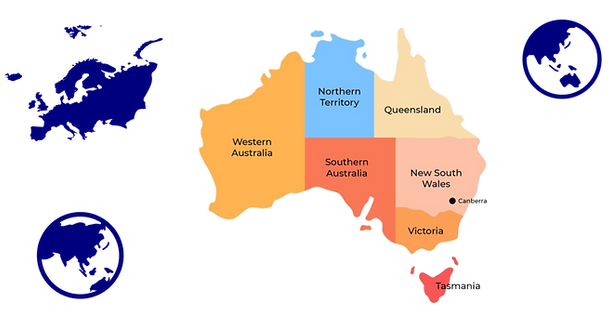
8 local & 3 regional hubs
AFRAN is organised into local and regional hubs that engage with members across disciplines and interests, facilitating collaboration and dialogue. AFRAN activities are described behind each pinpoint.
8 scientific communities
AFRAN is also organised in scientific communities that gathers experts and leaders from France and Australia around same science and innovation areas.




AFRAN Youth Engagement
Leadership Program
The AFRAN Youth Engagement Leadership Program, being the natural evolution of our AFRAN Alumni community, is a unique initiative designed to empower young students, researchers, and professionals who want to engage with the French–Australian community and promote academic, scientific, and cultural cooperation between the two countries — and across the Pacific and Indian Oceans.